

The Accidental Learner
how I ended up in Iran, Cuba, Germany and Syria

I didn’t set out to learn about Iran during WWII, or Cuba as Castro came to power, or the war that was decimating Syria in 2015. I didn’t go looking for stories about kids on the run. I was on the hunt for a good story, well told, and something kind of crazy happened. Three curiously linked books fell into my hands, one after the other, in a period of two weeks.
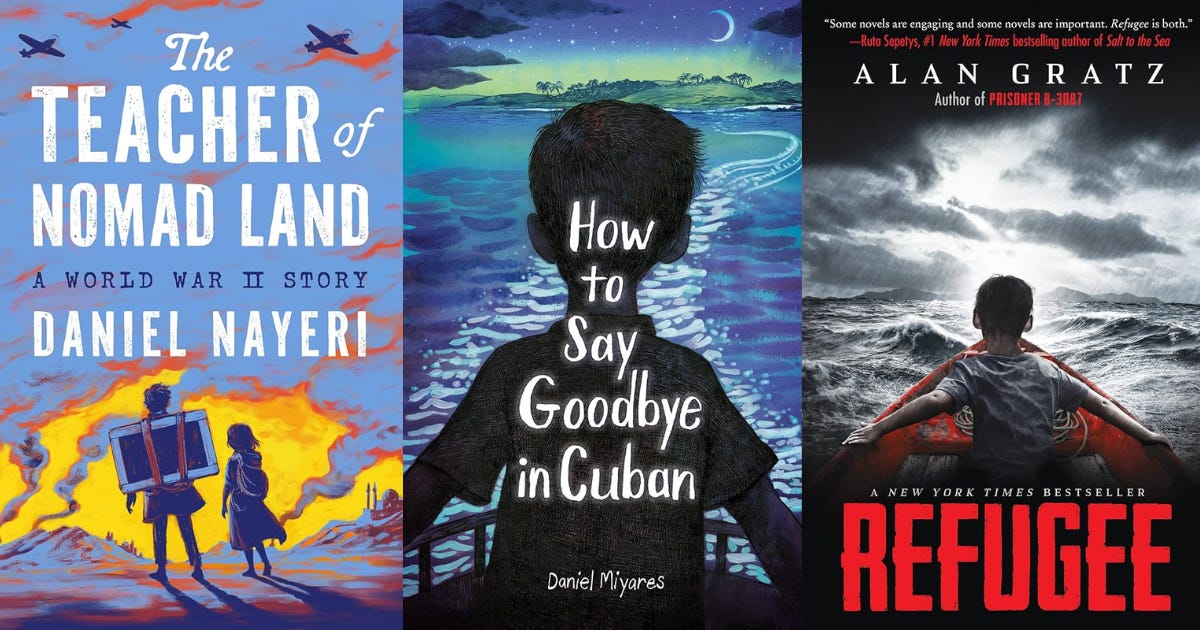
I had just read Solito by Javier Zamora with my book club, the true story of a nine-year-old boy migrating from El Salvador to the US. So when The Teacher of Nomad Land: A WWII Story by Daniel Nayeri showed up as a finalist for this year’s National Book Award for Young People’s Literature, another story about young kids leaving home on a perilous journey, I took note and snagged it at the library.
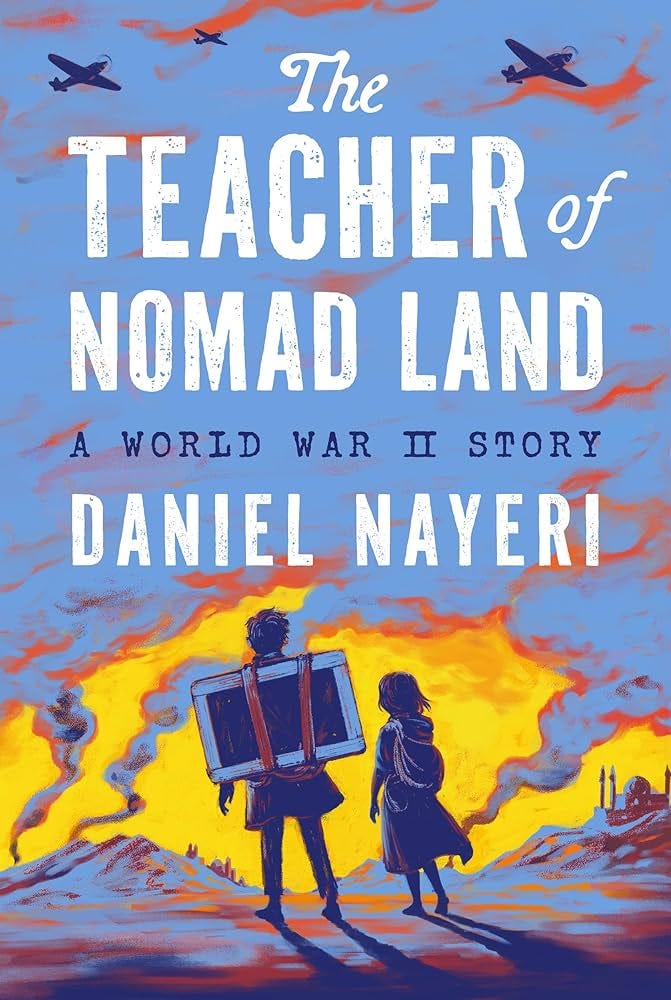
It was so short I could read the whole thing in just a couple sittings, taking the story in with a few big gulps. Two siblings are orphaned in Iran in 1941 and fight to stay together. I never knew that during WWII, Iran was occupied by Allied forces. They were there to stop the Nazis from advancing, there to claim the oil before Germany did, and there to secure a network of trains called “the Persian Corridor” that ran to the Caspian Sea. The shaw was deposed. There was rationing. Lives were lost. Danger lurked.
In the midst of it, Nayeri spins the tale of thirteen-year-old Babak, who must care for and protect his younger sister, eight-year-old Sana, after they are orphaned. Together, they search for a home and a community that will accept them. I loved the gorgeous writing from the start. The story begins with Babak cradling the headstone for his father, who was accidentally killed by an Allied soldier.
“He holds the stone as if it was a baby. He strokes the letters roughly chiseled onto the face of it. The war has made a cheapness of headstones. This one is barely the size of a cantaloupe.
MOHAMMAD NOORI 1901-1941
No other words. It doesn’t say that he liked peaches better than cantaloupes. That he raised Babak and Sana alone. That he taught the nomad tribes to read.”
Nayeri puts us in a very particular time and place with very particular people. We learn so much about 1941 Iran with so few words, absorbed through the lives of these siblings, wrapped in a gorgeous story.
Not long after I closed that book I picked up another and traveled from Iran to Cuba, whisked from the early 1940’s to the mid to late 1950’s with How to Say Goodbye in Cuban, written by the accomplished and wildly talented illustrator AND author Daniel Miyares. I found it while looking at Betsy Bird’s list* of Caldecott and Newbery predictions on School Library Journal’s blog here.
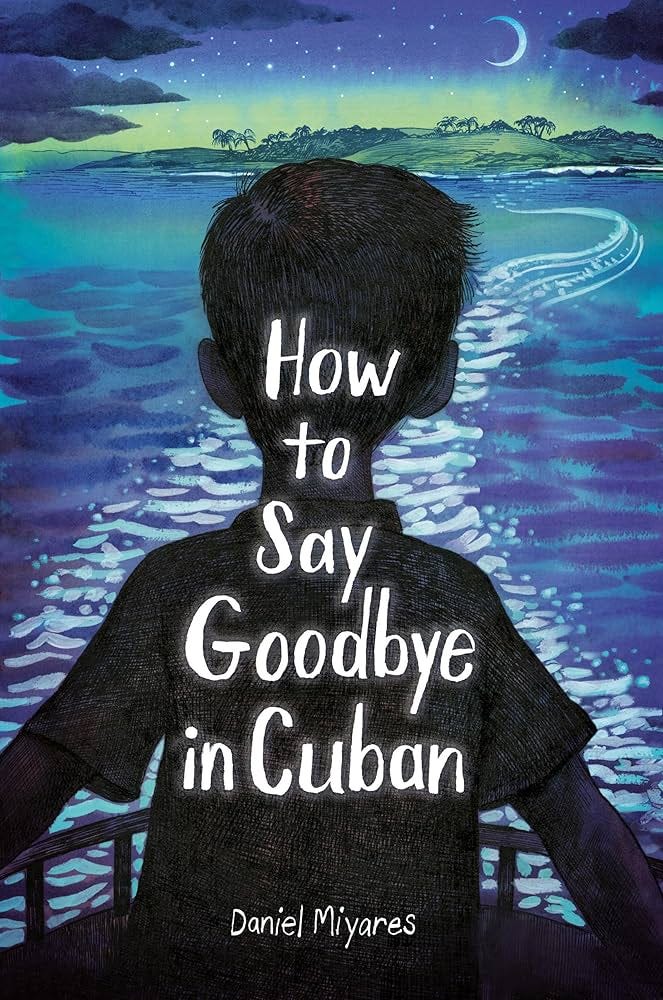
It’s a short graphic novel that I read in just over an hour, one of the beauties of this genre. Between Carlos’s story, told via graphic novel panels, are short blocks of text about Castro’s rise to power. It’s a great device to add tension. Carlos’s grandfather shows him how to make a slingshot with a tree branch and an old tire, and Carlos shoots rocks at bottles with his best friend. Meanwhile Castro is advancing with his guerillas.
Carlos’s dad wins the lottery and uses the money to buy a new home for his family and start a business. Castro takes it away. Tucked into the heart gripping narrative were fascinating facts. Escape boats were painted dark blue so they would match the water at night. And you can catch a tarantula with a dead lizard, a shoelace and a can. Historical facts, details about family life in 1950’s Cuba, and a particular child’s unique skill set were all woven with the graphic element to create a fascinating, informative story full of heart.
As soon as I finished How to Say Goodbye in Cuban, I unexpectedly bought a copy of Refugee by Alan Gratz, and it wasn’t because I was in the market for another kid-on-the-run story.
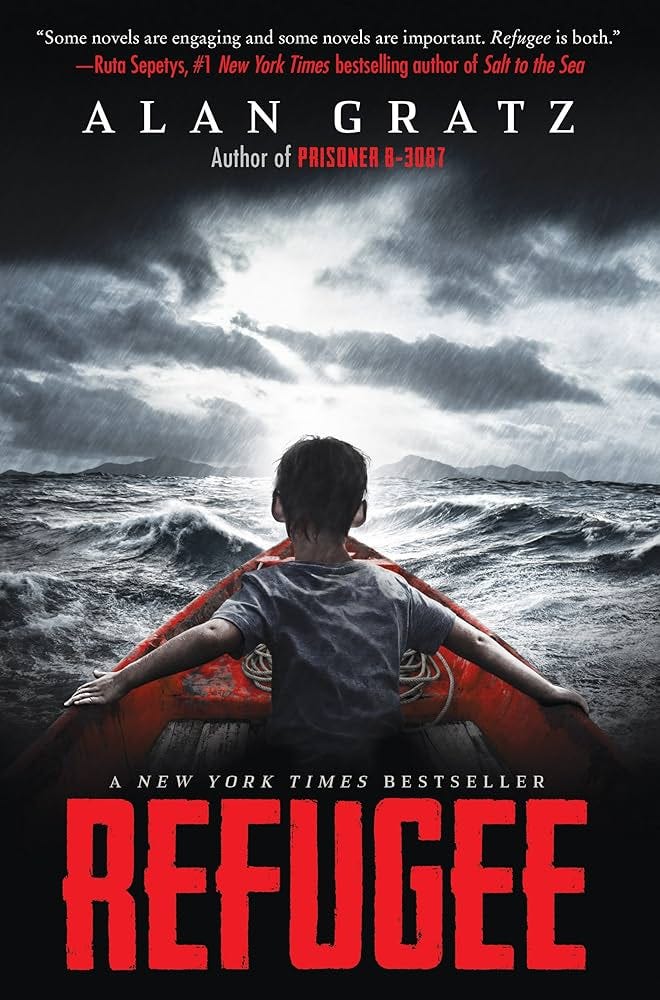
I was at our local independent bookstore, Bookpeople, and the children’s book buyer saw me coming up the stairs and asked if I wanted to meet Alan Gratz, to which I nodded, tongue-tied. My heart beat fast as I followed her. Alan Gratz is a wildly talented, New York Times bestselling children’s author. He is also super kind and generous.
Gratz paused from signing big stacks of books to stand up, shake my hand, look me in the eye, and ask about my books. I swear, children’s book writers are some of the nicest folks I’ve ever met. I bought a copy of Refugee** and he signed it, and I came right home and put it in my suitcase to read on my flight to Virginia, heading to the Crozet Book Festival.
Weaving three alternating POV’s in three different time periods, we meet:
Josef, a Jewish boy in Nazi Germany escaping to Cuba with his family in the 1930’s
Isabel, a Cuban girl fleeing to Miami to escape riots and unrest in 1994
Mahmoud, a Syrian boy running from his war-torn city to Germany in 2015
Josef tries to escape to the safety of Cuba from Germany in the 1930’s, and sixty years later Isabel tries to escape Cuba. Mahmoud tries to escape to Germany from Syria, the same country Josef flees in the 1930’s. The stories are all hair-raising nail-biters, we leave one story for another at intense moments, and they can be gruesome. From a shark attack to the threat of execution, guns to heads, it’s an intense read. I gasped out loud in public places on multiple occasions.
Do you see the crazy connections this book has with what I read before? Nayeri’s book is set in late 1950’s as Castro came to power and ushered in Communism. Over forty years later, Isabel flees the same country, now impoverished after the Soviet Union collapsed. Two siblings struggle during the occupation of Iran during WWII, then I’m back to middle eastern conflict in 2015 as Mahmoud tries to escape war-torn Syria.
I accidentally learned a lot the past two weeks, and I loved it. I don’t know why those books all passed through my hands in the past two weeks, but I’m paying attention with a heart and a head that are a little more full.
*I really enjoy all of Betsy Bird’s takes on children’s books and highly recommend you check out her blog, A Fuse #8 Production, on SLJ. You know another blog I really love that did an incredible job talking about picture books for over fifteen years? Seven Impossible Things Before Breakfast, written by Julie Danielson from 2006 to 2022. You can still read the archives, where you’ll find her long form, lovingly written, deep dives into picture books.
**Gratz’s most recent book is War Games and that’s what he was promoting on his book tour, but I’d been meaning to read Refugee for a while so that’s what I got. You should read both. I plan to.
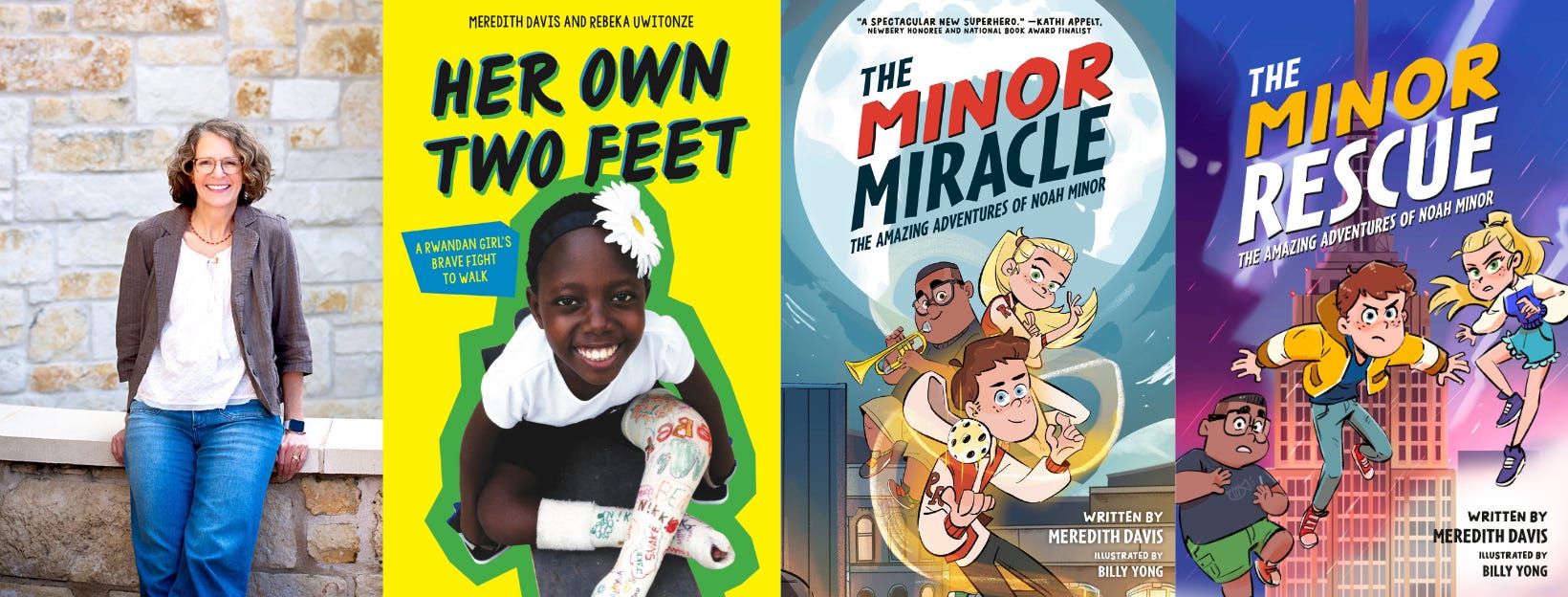
My name is Meredith Davis, and I’m an award winning writer of middle grade books, a former indie bookseller, founder of the Austin chapter of the Society of Children’s Book Writers and Illustrators and graduate of Vermont College of Fine Arts with an MFA in Writing for Children and Young Adults. Find teaching resources and author visit information on my website at www.meredithldavis.com. Mother to three, Nana to one and counting TWO, I live with my husband and a crazy doodle in Austin, Texas.
I LOVED The Teacher of Nomad Land. With so much fighting and hatred in the world today, the checkpoint scene made me cry. Also, his definition of a teacher. Beautiful story!